

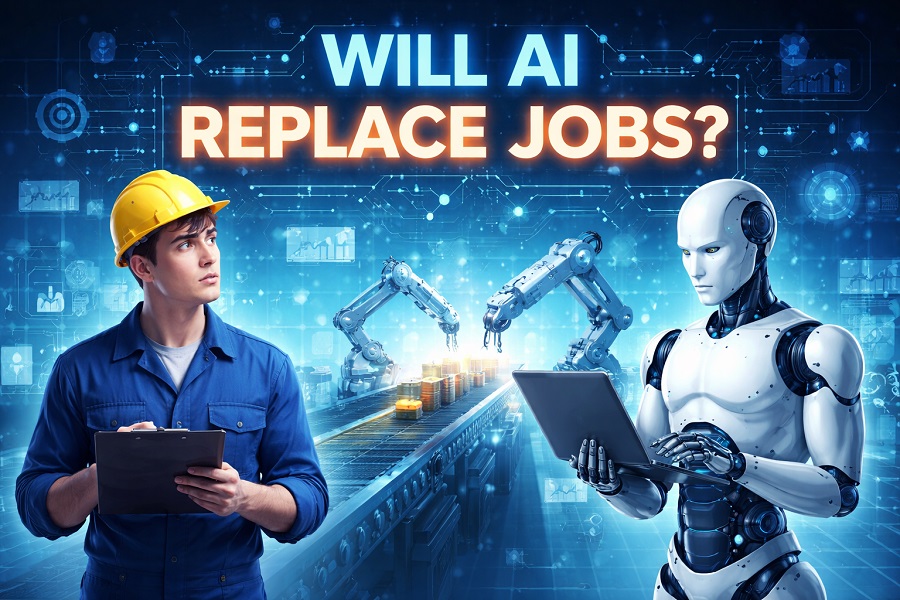
Artificial Intelligence (AI) is everywhere right now. From chatbots answering questions to tools that create images, music, and even code, it’s clear that technology is changing fast. Naturally, this raises a big question for students: Will AI replace jobs in the future?
The short answer is: some jobs will change, some will disappear, but many new opportunities will also be created. Instead of worrying, students should focus on building skills that will stay valuable no matter how technology evolves.
Let’s break it down.
Will AI Really Replace Jobs?
AI is already automating certain tasks. Jobs that involve repetitive work, data entry, or routine processes are the most at risk. For example:
- Basic customer support roles
- Data processing jobs
- Simple administrative tasks
But this doesn’t mean all jobs are disappearing. In fact, history shows that every major technological shift creates new roles. Many old jobs changed, but millions of new careers were born.
AI works best with clear instructions and patterns. It struggles with creativity, emotions, and complex decision-making. That’s where humans still have a strong advantage.
Jobs That Are Likely to Grow
Instead of focusing on what might disappear, it’s smarter to look at what’s growing. Many future jobs will involve working with AI, not competing against it.
Here are some areas expected to expand:
1. Technology and AI-Related Roles
People who understand how AI works will be in high demand. This includes roles like developers, analysts, and system designers.
2. Creative Fields
AI can assist with content creation, but human creativity still stands out. Writing, design, filmmaking, and marketing will continue to need original thinking.
3. Healthcare and Human Services
Jobs that require empathy include doctors, nurses, therapists, and social workers and they are hard for AI to replace.
4. Skilled Trades
Electricians, mechanics, and technicians work in real-world environments where human judgment is essential.
The Skills That Will Matter Most
If AI is changing the job market, what should students focus on instead?
The answer is simple: build skills that machines can’t easily copy.
1. Critical Thinking
AI can give answers, but it doesn’t always know if those answers are correct. Students need to learn how to question information, analyze problems, and make smart decisions.
Ask yourself:
- Does this make sense?
- What could go wrong?
- Is there a better solution?
These habits will always be valuable.
2. Creativity
Creativity is one of the biggest advantages humans have. While AI can generate ideas, it often relies on existing patterns.
Students should practice:
- Writing
- Designing
- Brainstorming new ideas
- Solving problems in unique ways
Creative thinking helps you stand out in any field even while preparing for academic priorities like key CBSE questions.
3. Communication Skills
Being able to explain ideas clearly is a powerful skill. Whether you’re working in business, technology, or healthcare, communication matters.
Focus on:
- Writing clearly
- Speaking confidently
- Listening carefully
Even in a tech-driven world, people still work with people.
4. Emotional Intelligence
AI doesn’t understand emotions the way humans do. Skills like empathy, teamwork, and leadership are hard to automate.
Students should learn how to:
- Work well with others
- Handle conflict
- Understand different perspectives
These skills are essential in almost every career.
5. Adaptability
The future is unpredictable. Jobs will continue to change, and new roles will appear.
The most successful people are those who can adapt quickly.
Students should:
- Be open to learning new things
- Stay curious
- Keep updating their skills
Learning doesn’t stop after school, it’s a lifelong process.
Why Learning AI Is Still Important
Even though AI won’t replace everything, understanding it is still a huge advantage.
You don’t need to become an expert, but having basic knowledge helps you:
- Use AI tools effectively
- Improve productivity
- Stay competitive in the job market
Think of AI as a tool, like a calculator or computer. The better you use it, the more valuable you become.
What Students Should Do Right Now
If you’re a student wondering how to prepare for the future, here are some practical steps:
1. Focus on Learning, Not Just Grades
Grades matter, but skills matter more. Try to truly understand what you’re studying instead of memorizing for exams.
2. Build Real-World Skills
Work on projects, internships, or freelance work. Experience helps you learn faster and stand out.
3. Explore Different Interests
Don’t limit yourself too early. Try different subjects and activities to discover what you enjoy.
4. Learn Smart Exam Strategies
Along with future skills, students should still prepare well for school exams by practicing most expected questions for Class 12 exams to build confidence and improve performance.
5. Learn Digital Skills
Basic knowledge of technology, online tools, and digital platforms is essential today.
6. Stay Informed
Keep up with trends in AI, technology, and the job market. Awareness helps you make better decisions.
The Big Picture: AI as an Opportunity
It’s easy to feel worried about AI taking over jobs. But instead of seeing it as a threat, it’s better to see it as an opportunity.
AI can:
- Handle repetitive work
- Save time
- Improve efficiency
This allows humans to focus on more meaningful and creative tasks.
The future isn’t about humans vs. AI. It’s about humans working with AI.
Final Thoughts
So, will AI replace jobs? Yes, some jobs will change or disappear. But many new ones will take their place.
The key for students is not to fear AI, but to prepare for a world where it plays a major role.
Focus on skills like critical thinking, creativity, communication, and adaptability. These are the qualities that will always be in demand.
In the end, technology may evolve but human potential remains the most powerful tool of all.